
C16 2025 (C-Series)
All Haute42 controllers going forward will be compared to the C16, just like how every other brand had to compete with the T16. This is the one to get.
At A Glance
Pros & Cons:
Pros:
- Great build quality with hybrid plastic and metal housing.
- Wind Engine switches.
- 2 USB-C ports
- High quality top menu bar with RGB/Tournament toggle buttons
- New ringed LED housing means switches don’t affect RGB.
- Innovative magnetic plate that can be removed with 1 button. No more unscrewing screws to change art.
Cons:
- Frosted plate can slightly dull the art
| Item | Description |
|---|---|
Dimensions |
30cm X 20cm |
Buttons |
16 ( 23.5 mm x 15, 25.8mm x 1 ) |
USB-Ports |
2 x USB-C, 1x USB-A (Passthrough) |
Artwork Friendly |
Yes (Front Only) |
Material |
Hybrid Plastic and Aluminium |
Switches |
Wind Engines |
Price |
₹7800 (Approx.) |
Variations:
The New Benchmark for Value
You might be surprised that I treat the U16 as a predecessor to the C16. The U16 was the first Haute42 controller that truly looked and felt “professional,” and it set a strong standard for performance per price, especially in terms of how much you got out of the box without needing upgrades.
In 2025, the C16 fills that same role. Much like Thanos collecting the Infinity Stones, the C16 steals standout features from other controllers. It adopts the sleek top menu bar from the X-Series, a clean black strip that houses the COSMOX LED logo, a screen, tournament and RGB toggle buttons borrowed from the M-Ultra Gen 1, and larger, more refined menu buttons that replace the small nubs found on older controllers.
It also features a sloped, textured wrist rest similar to the M-Ultra controllers, large pre-installed desk pads on the bottom, and a blank metal underside, again echoing the M-Series design. Dual USB-C ports round out the package.
Like the U-Series, which shipped in a premium box with useful accessories such as a screwdriver, the C16 also includes a thoughtful extra. This time, it is a full-sized, high-quality keycap and switch remover. It is a clear upgrade over Haute42’s older tools and has become my go-to for working on all of my controllers. The screwdriver from the U16 is gone, but there is a good reason for that, which becomes clear later. The C-Series also continues the U-Series tradition of including extra art cutouts in the box, allowing you to swap designs easily. At this point, the U16 lineage should make sense.
All of this comes at a price that remains competitive with the T, R, and U series.
Smart New Features That Actually Matter
The C-Series introduces two features that earlier controllers did not have. The first is a redesigned RGB lighting system. Older models placed LEDs in small housings beneath the switches, meaning the type of switch used directly affected how well the light reached the button caps. The C-Series replaces this with circular RGB housings that surround each keycap. Unlike the raised RGB rings on the R16, these sit flush with the top plate, ensuring they do not interfere with sliding inputs. The result is consistent RGB lighting regardless of the switches or keycaps you use.
The second major improvement is how artwork is swapped. The U-Series already simplified this process by allowing screws to be removed from only one side, cutting the effort roughly in half. The C-Series goes further by eliminating screws entirely. The top plate is now magnetic and can be released by pressing a dedicated button on the underside. You simply lift the plate with the button, pull it off the body with a finger, place your new artwork, and snap it back into position.
These additions are fantastic for anyone who enjoys customization and RGB lighting, but even if you do not, the overall value of the C-Series remains compelling. And the C16 still has one more trick up its sleeve.
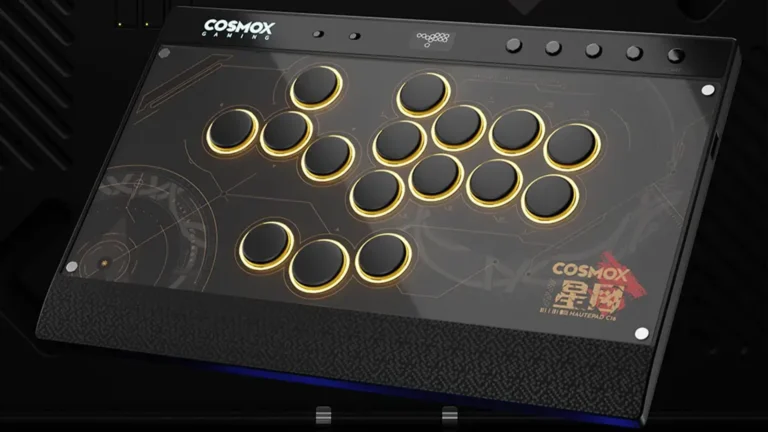
The ringed RGB housing and one of the stock artwork cutouts. Image by Haute42.
Hybrid by Design
According to Haute42, the “C” in C-Series stands for Combination, and the name is well earned. Rather than choosing between plastic or metal, the C16 blends both. The bottom plate is made from aluminum alloy, providing weight and that cold metal feel many players enjoy. This gives it more heft than the U16 or R16, while still being noticeably lighter than the M-Plus or M-Ultra. This lands the C16 in a sweet spot where it’s light enough to carry with one hand, but heavy enough to feel ‘premium’.
The sides are made from opaque black plastic, while the top plate is frosted acrylic, although it was briefly clear acrylic during a limited early run. The result is a controller that pulls the best qualities from multiple materials without committing too hard to any single one.
For those who want even more metal, Haute42 also sells a replacement magnetic aluminum top plate for around ₹1800. It installs using the same single-button release mechanism, effectively turning the C16 into an approximately 80 percent metal controller.
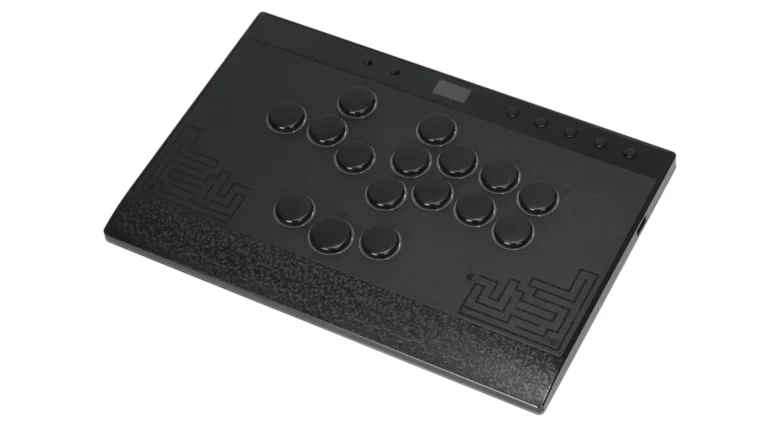
A C16 with a metal plate accessory attached. Image by Haute42.
The Once and Future King
The C16 was soon followed by the C16S, a sidegrade featuring a different button layout and redesigned metal plate accessories. After that came the M-Ultra Gen 2, which retained the RGB ring lighting, switched to the ‘Daigo layout‘, and introduced the cable lock. At the time of this review, the latest addition to the C-Series is the C-AT, which keeps the cable lock from the M-Ultra Gen 2, retains all core C-Series features, and adds adjustable button cap heights.
While the C-AT and M-Ultra Gen 2 offer meaningful upgrades, they are priced 60 to 100 percent higher without delivering proportional gains in value. The only way I see the C16 being dethroned is if features from newer controllers, such as the cable lock, are brought to the C-Series in a refreshed lineup while retaining the same price. Till that happens, the C16 remains the undisputed price-to-performance GOAT for 99% of players.
For the remaining 1%, including myself, there is the C16S.